Meet the Team: Lisa Keaton, Country Manager | OWC Germany
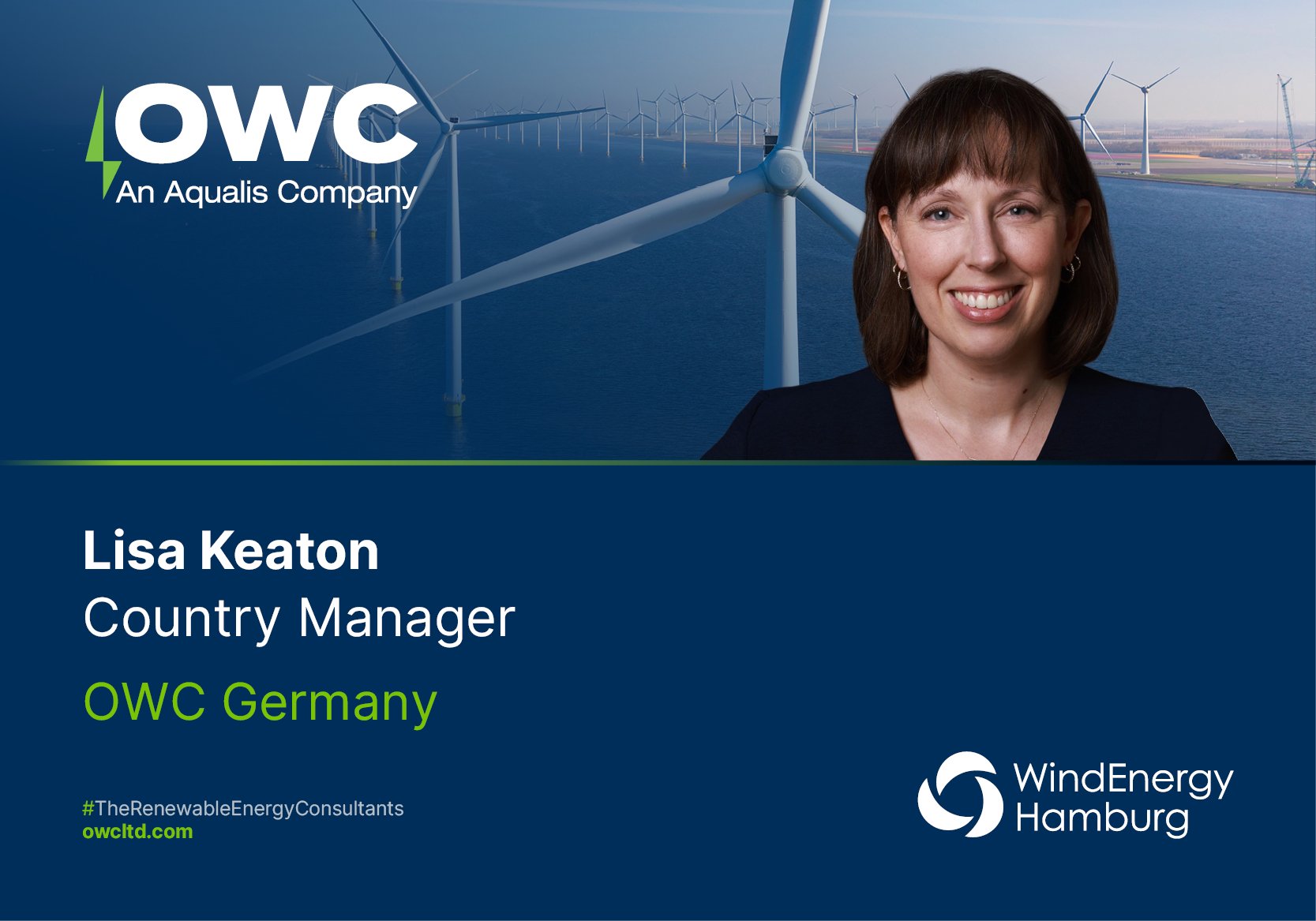
At OWC, our people are at the heart of what we do, and we invite you to get to know our team members so you can meet the energy behind change.
Ahead of WindEnergy Hamburg 2026, we sat down with OWC Germany Country Manager Lisa Keaton to discuss the opportunities and challenges shaping Germany’s wind energy sector.
From permitting and project delivery to market risk and investment decisions, Lisa shares practical insights from the front lines of renewable energy development, and why understanding where the real risks lie has never been more important.
What first drew you to wind energy, and what has kept you in the sector?
I came to wind energy from an environmental conservation angle. I’m from the East Coast of the U.S., where coal mining causes serious, visible habitat loss — and I saw renewable energy as a direct way to cut that down. That’s still what keeps me here: at its core, this sector is about generating power without tearing up the places we live in.
How has working across both offshore and onshore wind shaped your perspective?
The industry doesn’t make nearly enough use of how transferable the skills are between offshore and onshore. I enjoy both ends of it. Onshore has a strong, local sense of place, while offshore operates on a much bigger scale. I’ve also watched how effective centralised government planning can be at getting the most out of available offshore resources, and that’s shaped how I think about what good project development looks like on either side.
What attracted you to leading OWC Germany, and what do you want the business to become known for in the wider regional market?
What drew me to OWC was the combination of country-level business development with genuinely international resources — local depth, backed by global reach.
As for what I want OWC Germany known for: reacting quickly, and using our practical, execution-side experience across onshore and offshore renewables to tell clients not just which risks exist, but which ones are actually likely to hit, and what to do about them. That’s paired with a commitment to technical rigor and high-quality reporting.
Germany’s offshore wind ambitions are significant. Where do you see the biggest gap between ambition and the practical realities of delivering bankable offshore projects?
Revenue risk and cost risk are really two sides of the same coin. Germany’s now addressing the revenue side through the planned two-sided CfD in EEG 2027 — a step the industry has been pushing for. But the cost side is where the bigger exposure still sits: offshore projects here typically run five to seven years between auction award and commissioning, and without effective indexation of the CfD strike price, that’s a long stretch for turbine, foundation, cable, installation, and financing costs to move, with the project carrying most of that risk.
What is shaping investment and development decisions most strongly in German wind energy today, and how is that changing what developers and investors need from their technical advisers?
Increasing price pressure is raising the bar for technical advisers specifically: it’s no longer enough to be technically competent in the abstract — advisers need to be constantly in contact with, and informed by, current market prices and procurement practices, because that’s where the margin for error now lives.
With German offshore wind spanning both North and Baltic Sea, do the opportunities and challenges differ between the Baltic and North Sea markets?
The North Sea has largely homogenous seabed conditions, so it’s building at scale and now comes down mostly to executing well — though as sites push further offshore, distance from land will become its next big challenge. The Baltic Sea has more technical variety, since seabed conditions shift from site to site, plus tighter environmental restrictions given how sensitive the area is — and it’s more fragmented politically, with several states packed closely together operating under different permitting regimes.
What do international developers and investors most need to understand about Germany?
The permitting regime is what we get asked about most. It’s mature, but demanding and thorough — you need to get things right the first time.
What makes you most optimistic about the future of wind energy in Germany and the wider region?
Recent developments in the legislation show a willingness in Germany to course-correct after a failed auction round. And honestly, the level of criticism the reform is getting says something positive on its own — it means international developers still care deeply about Germany. The country needs all the power generation it can get, and it’s already shown it can deliver at scale through central planning and its commitment to grid expansion.
Bid, Build & Operate with Confidence: Join OWC at WindEnergy Hamburg
Meet OWC Germany’s Lisa Keaton alongside members of the in-country team, joined as well by consultants from OWC Poland, Denmark and the UK, ready to discuss your onshore or offshore wind project and the technical support to help you move forward with confidence.
📍 Meet OWC at Stand 413, Hall B5
Renewable energy projects are built on confidence. We help create it.
| Technical Due Diligence to Supports Cadeler’s Acquisition of Menck. Find out more. | Technical Due Diligence to Support Strategic Acquisition of Gennaker. Find out more. | Technical Advisory Supporting Pre-Development Studies for ELWIND. Find out more. |