
Floating Solar in Asia Pacific: How FPV is scaling from pilots to grid-scale
FPV and Asia Pacific insights from Bernardo Kahn, OWC Vietnam

Asia Pacific has established itself as the global center of gravity for floating solar PV (FPV) and floating PV engineering, with markets such as Vietnam emerging as key growth centers.
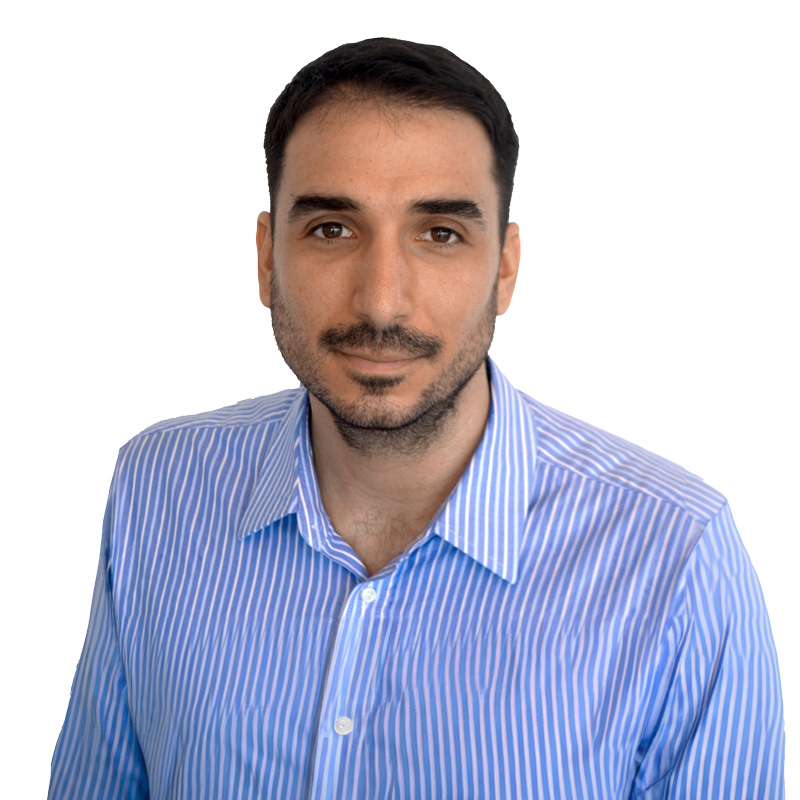
Bernardo Kahn, Senior Offshore Renewable Energy Engineer at OWC, is currently supporting floating solar and FPV project development in Vietnam, bringing international floating PV engineering experience to local developers.
In this insight-led discussion, Bernardo shares his perspective on where the FPV market is heading, the challenges unique to the region, and what developers need to consider as projects scale up across increasingly complex environments.
1. China has clearly led the early deployment of floating PV, but the regional picture is broadening. Beyond China, which Asia Pacific markets do you see emerging as the next front-runners for FPV development – and what is driving momentum in these countries?
It is true that China has been a key player in the region for the FPV market, but we are seeing growing interest and investment in other countries such as Vietnam, Philippines, Indonesia, Malaysia and Thailand. Further West in Asia, we can also mention India as an active market. These are mostly ‘energy-hungry’ nations with population and economic growth.
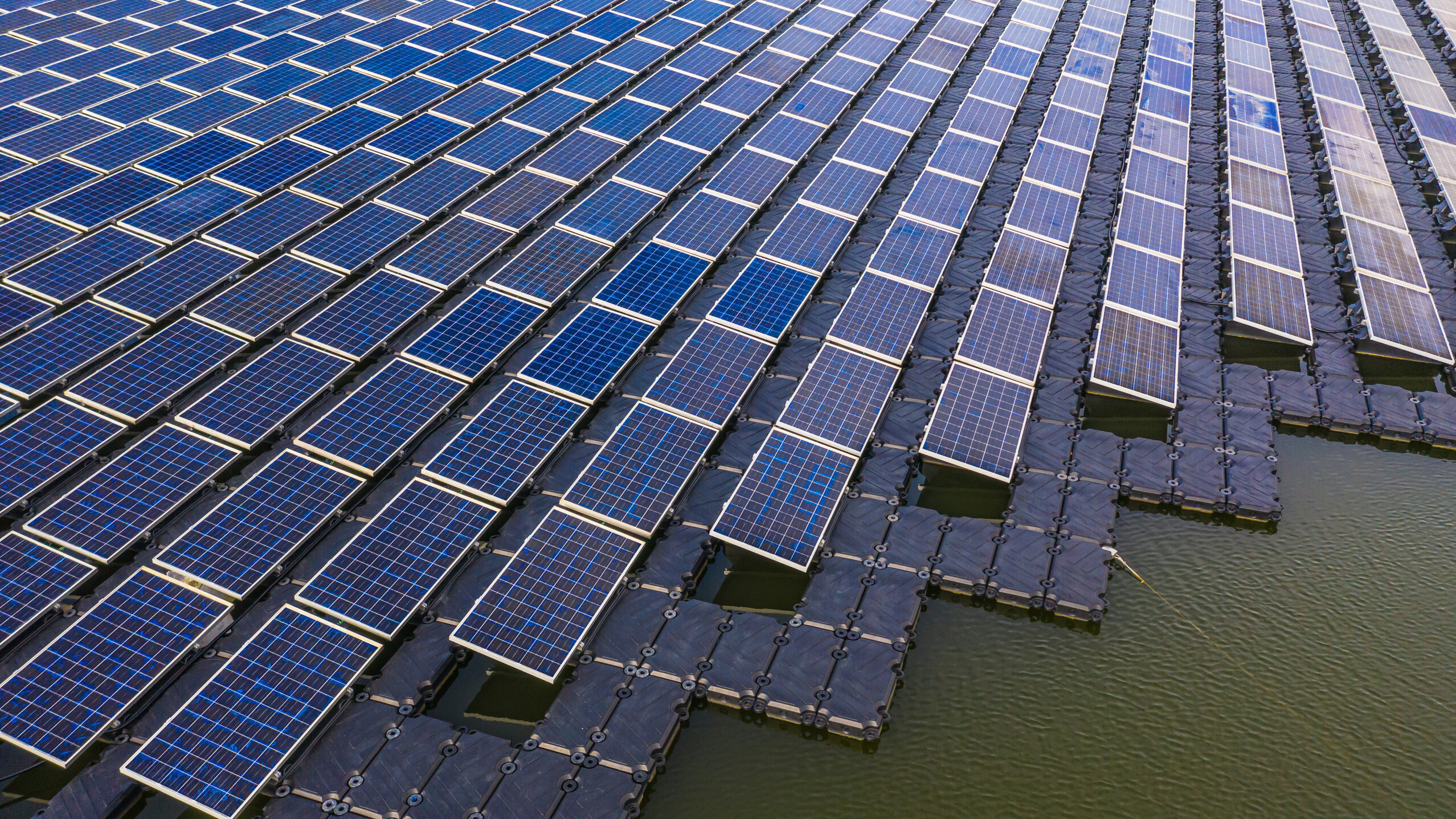
Most of these countries rely on fossil fuels for a significant part of their energy matrix and are looking for ways to decarbonize. Having abundant solar resource areas and considering the ongoing trend of lower costs in PV equipment, solar energy becomes a very attractive choice.
Another important thing to notice is the geography of the Asia Pacific (APAC) region, composed of large inland lakes, basins and hydropower reservoirs. These are ideal places for the deployment of FPV plants, especially when considering synergy with existing infrastructure from hydro power plants.
2. Environmental, technical and regulatory challenges for Floating PV in Asia Pacific – what do FPV developers face in APAC and how should these challenges be approached?
Installing FPV in large hydro dams can come with the challenge of significant water level variation and water depth, underwater valley shape bathymetry, large fetch creating dynamic environment, vicinity with sensible infrastructure, which in turn makes the mooring system design more difficult and requires specific expertise.
We see that many EPCI contractors new to FPV come with experience in ground-mounted PV projects, so they lack knowledge in hydrodynamics, floater selection, and mooring and anchoring system design. It is important that owners and developers understand that FPV projects require special skills and adapt their traditional development steps with different studies, surveys, and development schedule.
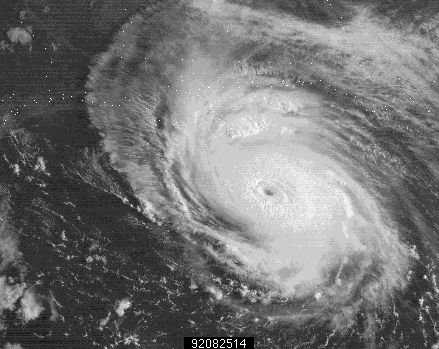
Another characteristic in the region that requires expert advisory is the consideration of typhoons in the design phase, these may cause extreme wind speeds and floods, posing a risk to the FPV plants. Performing more detailed metocean studies with detailed site characterisation, instead of just taking normative conservative assumptions, can go a long way on mitigating risks for your project, at the same time avoiding overdesign.
On the permitting side, since FPV can be a new technology in some countries in the region, sometimes local authorities do not have experience with it and do not know what to ask and/or start asking developers for unreasonable requirements for the sake of conservatism. It is important to engage with local authorities as soon as possible in the project to understand their needs and provide capacity building by transmitting knowledge regarding the technology. This strategy can avoid future delays and incurred cost on the permitting process. It is good practice to partner with companies that have international experience with FPV permitting and can present what is done in other countries to local authorities.
3. Cost drivers and CAPEX optimisation in grid-scale floating PV projects – what are the key drivers as FPV moves from pilots projects in calm environments to grid-scale in complex conditions?
The first step is to plan the right site investigation and study at the right moment. An upfront understanding of the risks involved and the engaged of a site survey early on in the project phase – is one of the best ways to minimize CAPEX for a project.
Then, one of the key decisions that needs to be taken by developers and/or EPCI contractors is the choice of the supplier for the floaters and mooring system. Today, there are several players on the market, with many different technologies, and it requires some experience to analyze them.
Two things need to be clear:
- There isn’t one “the best” FPV technology in the market
- Some technologies are more adapted to certain site/project characteristics than others, each one presents advantages and disadvantages
Having a deeper understanding of the key non-price requirements when choosing the suppliers can help developers and EPCI contractors finding the sweet spot of compromise between cost and performance.
4. Designing climate-resilient floating solar projects in typhoon-prone regions – how can developers embed risk mitigation into project design from the earliest stages?
Even though climate change is already a reality, with extreme events happening all around us at this moment, the engineering community hasn’t really changed the way we design infrastructure. Too often we still see projects being prepared based on statistical historical data, while we are already in the era of “unprecedent recurring events”.
This is why since 2021 we have created a Climate Change Adaptation service line in OWC, helping our clients navigate these uncertainties and mitigate risks with the best available statistical modelling. No one can predict the future, but we make sure our clients are prepared for it and make informed decisions.
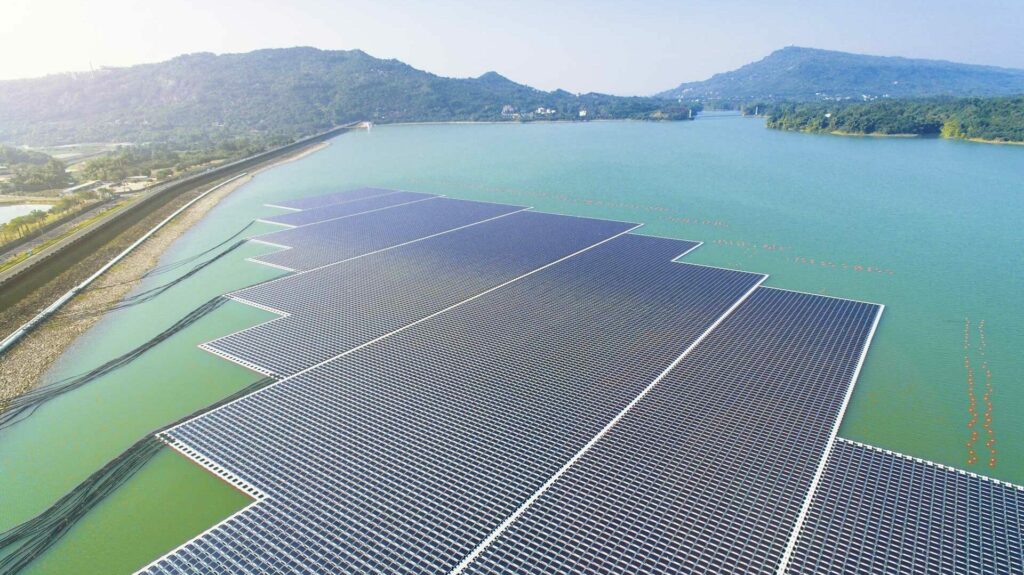
Developers need to perform a detailed risk assessment early on, preferably during site screening stages, to identify how vulnerable their potential sites are to climate change and extreme natural events. This analysis can indicate the need of more advanced studies and/or surveys compared to typical low risk sites. Floating solar is particularly vulnerable against water level variation (severe draught or floods), strong wind and associated induced waves. Design can accommodate very harsh conditions but shall be anticipated and considered in the engineering phases.
Another investment that is worth its cost is proper instrumentation once the FPV farm is in operation, this can not only help monitoring and preventing against incidents but also provide valuable site-specific information that later could be used to calibrate numerical models and predict how that specific region will respond to climate change.
5. Floating PV is increasingly being developed as part of wider energy systems rather than as a standalone technology. How do you see the role of energy storage, hybridisation and interconnectors evolving alongside FPV in Asia Pacific?
Indeed, these are exciting times when hybrid projects are getting more common all over the world. In countries such as Philippines and Malaysia, a lot of the new large scale solar projects are already being tendered with BESS requirements, and this is a growing tendency. Energy storage and increased interconnection with neighbouring countries are two winning strategies to cope with the variability of renewable energy source, and at the same time building a more resilient electrical infrastructure, and governments are starting to see this.
Developers should think not only about their solar asset in an isolated way but trying to take advantage of synergies with other technologies. For example, for FPV projects in hydro power plants, not only the grid connection and transmission infrastructure could be shared, but also an optimized control of the mutual energy production can be set up.
If we think about offshore FPV at sea, then possibilities can be even more interesting. We are working right now on the EU-SCORES that aims to demonstrate the benefits and efficiency of multi-source energy parks. Within this project, a 3 MW offshore floating solar island will be installed together with an existing bottom-fixed offshore wind farm off the coast of Belgium. The complementary production profile shared electrical interconnection and survivability of the FPV plants will all be analysed.
The industry needs initiatives like this to boost maturing technologies, mitigating risks, optimizing yield and reducing costs.
6. Drawing on your experience, is there a particular FPV project – in Asia Pacific or globally – that illustrates key lessons for developers in the region as projects scale up?
The largest and most complex asset in operation in Asia Pacific is probably the Cirata floating solar farm, West Java, Indonesia.
Commissioned at the end of 2023 by PMSE (JV between Masdar and PLN), the 192 MWp project has been built in a complex site: up to 90 meters of water depth, 18 meters of water level variation, around 2500 anchors, underwater complex bathymetry with very soft soil conditions.
OWC (formerly Innosea) has been engaged by the Owner and the PMC (Tractebel) to review the detailed engineering design and supervise installation of the floats, mooring and anchoring system.
Key lessons learnt for this kind of environment are:
- Ground mounted developers need to be supported from the very beginning to define site conditions.
- Over conservative assumptions and layouts can lead to high design complexity and associated procurement/design/installation challenges.
- Wind loadings and sheltering on PV panels depends on the floater technology. CFD (Computational Fluid Dynamic) and Wind Tunnel test are complementary and necessary to be challenged before detailed design.
- Deadweight anchor design is complex: Geotechnical investigations and pull-out trials are complementary and necessary to be anticipated.
- Comprehensive geotechnical surveys and a good dataset does not go far enough: slopes analysis, soil interpretations, design checks, and pull-out tests analysis are key and should be performed by experts.
- Methodology and normative environment are not yet well established.
- Post installation surveys and adjustment are necessary.
7. Finally, for developers looking to be at the forefront of floating PV in Asia Pacific, what principles would you highlight to ensure projects remain technically robust, bankable and future-ready?
The first thing I would say is to surround yourself with partners and consultants that have specific experience in FPV, specially if the chosen EPCI contractor does not. Having a track record in ground-mounted PV helps, but it is not enough to guarantee a robust project.
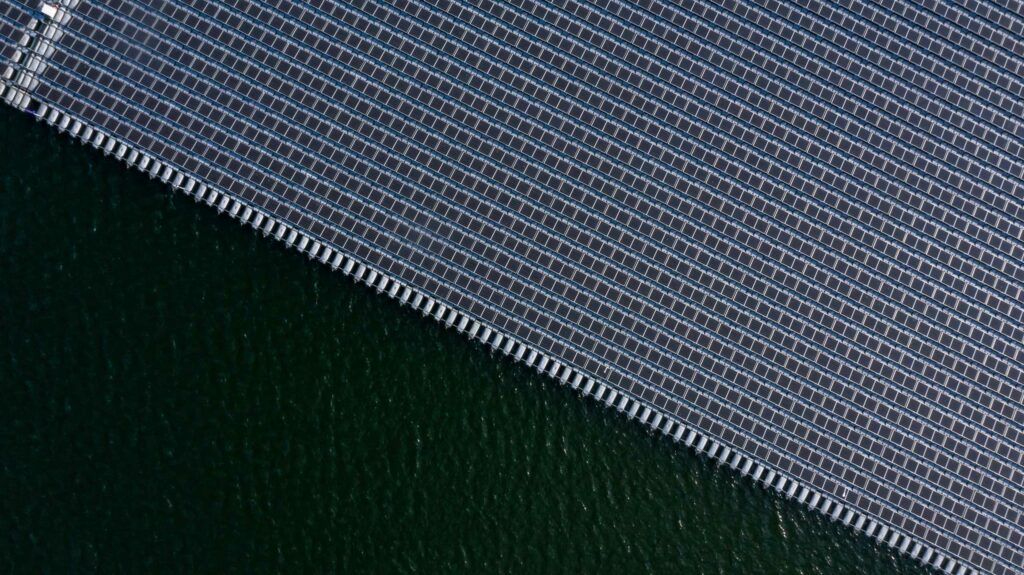
Another advice is, depending on project location, increasing DEVEX costs to perform better surveys. More detailed studies should be seen as an investment in asset resilience, one that may pay itself in the future with lower OPEX costs and risk mitigation. This is particularly true for regions exposed to complex site conditions such as large hydropower plant reservoirs in APAC.
Key Contacts in FPV and Vietnam
Bernardo Kahn
Snr. Offshore Renewable Energy Engineer
Riccardo Felici
OWC Director, Asia Pacific

Benoat Danglade
Service Line Lead, Floating Solar PV